
-

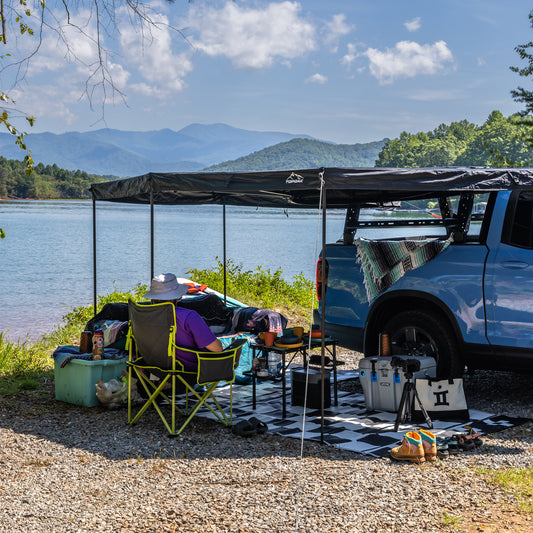 Sale
Sale270-degree Awning
Regular price From $649.00 USDRegular priceUnit price per$699.00 USDSale price From $649.00 USDSale -

 Sale
Sale180-degree Awning
Regular price $649.00 USDRegular priceUnit price per$699.00 USDSale price $649.00 USDSale -
270-degree Awning Room
Regular price From $1,048.00 USDRegular priceUnit price per$1,178.00 USDSale price From $1,048.00 USDSale -
180-degree Awning Room
Regular price From $1,018.00 USDRegular priceUnit price per$1,148.00 USDSale price From $1,018.00 USDSale -

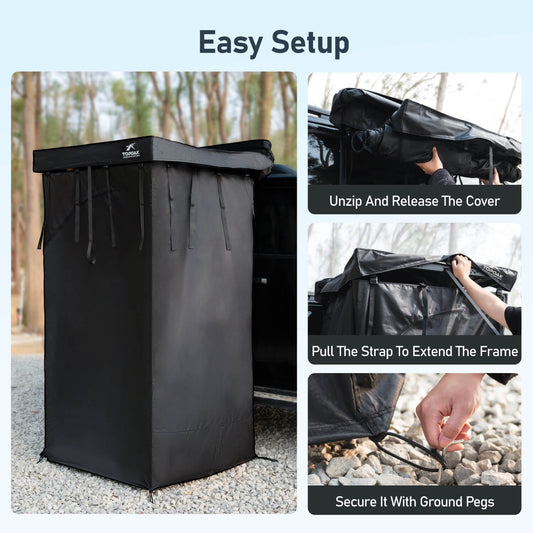 Sale
SaleCar Shower Tent
Regular price From $149.00 USDRegular priceUnit price per$159.00 USDSale price From $149.00 USDSale -
Annex Room for Vision
Regular price $369.00 USDRegular priceUnit price per$399.00 USDSale price $369.00 USDSale -
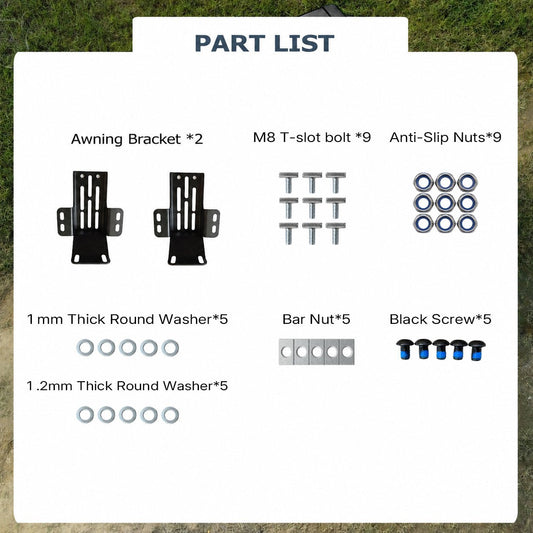
Awning Mounting Brackets (1 Pair)
Regular price $49.00 USDRegular priceUnit price per$79.00 USDSale price $49.00 USDSale -
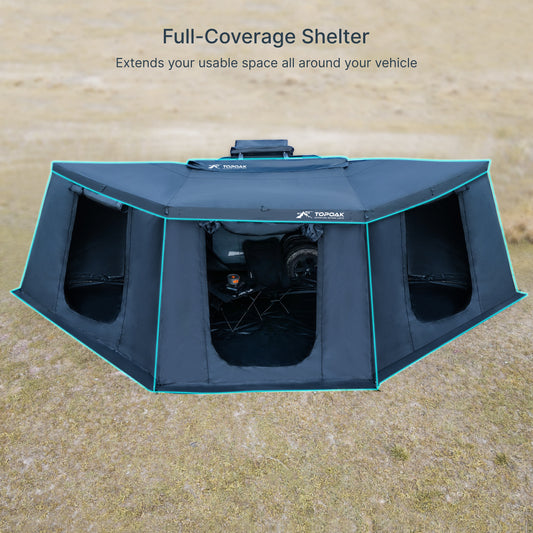
270-degree Awning Walls
Regular price From $399.00 USDRegular priceUnit price per$479.00 USDSale price From $399.00 USDSale -
180-degree Awning Walls
Regular price From $369.00 USDRegular priceUnit price per$449.00 USDSale price From $369.00 USDSale -
Rainfly Support Kit
Regular price From $49.00 USDRegular priceUnit price per -
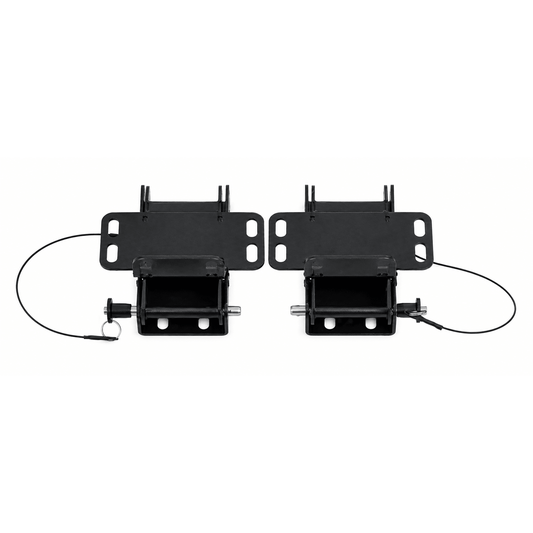
Quick-Release Awning Brackets (1 Pair)
Regular price $129.00 USDRegular priceUnit price per$159.00 USDSale price $129.00 USDSale


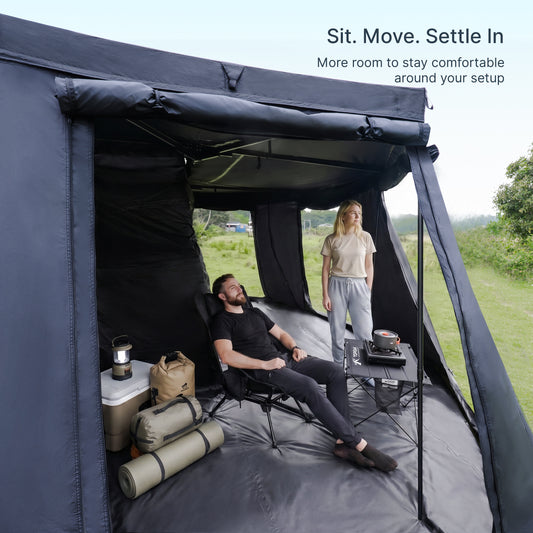


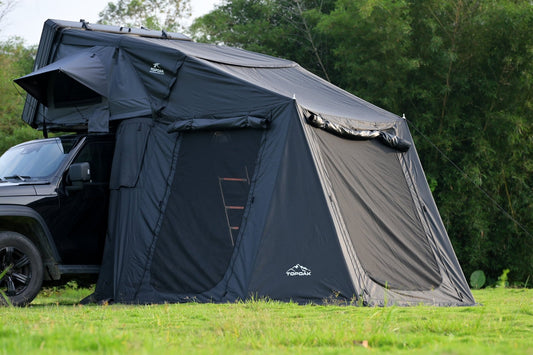





Need help with your awning?
Choose the right coverage for your camp or find the best way to mount an awning with your rooftop tent.
FAQ
Common questions before choosing an awning
Is a 270-degree awning worth it?
A 270° awning makes the most sense when you regularly use both the side and rear of your vehicle—for example, when your fridge, drawers, or camp kitchen are at the rear while your main living area sits along the side. If almost everything happens beside the vehicle, the extra rear coverage may not be worth the additional size, weight, and cost.
Is a 180° or 270° awning better?
Neither is automatically better. A 180° awning usually works well when most of your camp stays along one side of the vehicle. A 270° awning becomes more useful when you regularly use both the side and rear. The actual canopy footprint matters more than the degree number alone.
Is a straight awning the same as a 90-degree awning?
Generally, yes. A straight or pull-out awning usually refers to the traditional rectangular canopy that extends directly from one side of the vehicle. This style is also commonly described as a 90° awning.
What size overland awning do I need?
Start with the smallest footprint that comfortably covers the parts of camp you use most. Think about where you sit, where doors and drawers open, where the fridge or kitchen sits, and which of those areas need protection at the same time.
Which side should I mount my awning on?
Mount it on the side where your campsite naturally forms. Consider your rooftop tent opening direction, kitchen or fridge location, the doors you use most often, and where you normally place your table and chairs rather than following a universal driver-side or passenger-side rule.
Can a 270° awning block the rear hatch?
It can. Clearance depends on the awning's rear-arm geometry, mounting height, front-to-rear position, and the path of your hatch as it opens. Check hatch clearance with the awning both packed and fully deployed.
What type of crossbar can I mount an awning to?
It depends on the mounting bracket and the attachment points available on your crossbars. TOPOAK's included brackets support several common setups, including M10 and M8 track channels, square crossbars without slots, and vertical square bars. Other profiles may also work if they provide an equivalent secure mounting point.
Can you mount an awning with a rooftop tent?
Yes. The right mounting method depends on the rooftop tent, available rails, bracket positions, and how the tent opens. For TOPOAK rooftop tent combinations, see our awning-to-rooftop-tent mounting guide .
Does fabric weight tell you how good an awning is?
No. Fabric weight is only one part of the design. For shade, consider UV resistance, opacity, and canopy depth. For rain, look at waterproofing, tension, and drainage. For wind, the frame, hinges, brackets, support system, and anchoring become just as important.
How do you prevent water pooling on an awning?
Keep the canopy properly tensioned and give it enough slope for water to run off. A well-designed canopy shape, combined with correct setup, helps prevent low areas where rainwater can collect.
Do freestanding awnings still need support poles?
Sometimes. Freestanding means the awning can stay open without immediately relying on vertical support poles. In stronger wind or during longer stays, support poles, stakes, or guy lines can still provide useful additional stability.
Are integrated awning lights worth it?
They can be, especially if you often cook, organize gear, or spend time under the awning after dark. The biggest advantage is convenience—you do not need to unpack, hang, and remove a separate lighting setup every night.
Do awning walls make a difference?
Yes. Walls are especially useful when the sun, rain, or wind is coming from the side rather than overhead. They can provide protection from low-angle sun and wind-driven rain while also adding privacy without requiring a larger roof footprint.